The COVID-19 pandemic has taken over everyone’s lives and continues to incredibly affect those around the world. Mask mandates, recommended by the Centers for Disease Control and Prevention and sometimes required by businesses, have flooded the United States. For those who are hard of hearing or completely deaf, which constitutes of 1 in every 20 American, their lives have become increasingly more difficult. Due to added communication barriers from the required masks, those apart with hearing impairment who rely on lip reading find themselves in a tough situation.
Stacey Dieterle of Ellington, CT said she didn’t even realize how bad her hearing was until the world became masked.
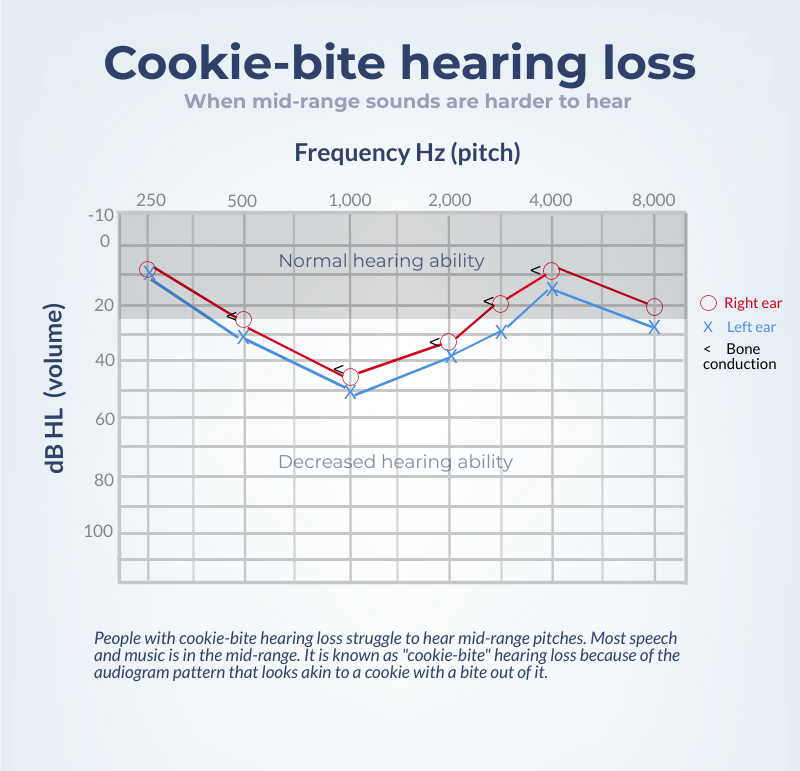
The mother of two experienced slow progression hearing loss throughout her 40’s. A hereditary condition, Dieterle’s mother began losing her hearing at the same age, and before her, Dieterle’s grandfather. According to data from the Centers for Disease Control and Prevention, “as women age, they may have more difficulty hearing a lower frequencies than men do.” However, for Dieterle the opposite is true. She experiences “cookie bite” hearing: low frequencies are heard; but higher frequencies are lost.
“It was like the world went into mumbles,” Stacey Dieterle said regarding the pandemic and mask requirements. “I had been reading lips and now my coping mechanism was gone. It was difficult. Now, I have more trouble communicating with people.”
When going out to run errands alone, Dieterle said others are usually cooperative when learning of her hearing loss, and she asks them to repeat what they said. However, getting the mask on in the first place almost always causes trouble. Dieterle said getting them on and off without knocking off her hearing aids is always a trick.
Bridget Roguz from Longmeadow, MA, was born with severe hearing loss and relies solely on lip reading to adapt in the hearing world.
The special ed teacher of many years, who also communicates orally, said the masks took away her independence by removing all visual facial cues.
“I have been surrounded by hearing people for many years, I felt I fit in the hearing world. I am outgoing, happy, and felt connected with everyone,” said Roguz of life pre-pandemic. “Then, Covid hit [and] my life turned upside down. I didn’t know how I was supposed to go forward. I felt paralyzed and shut out from people.”
Others apart of the deaf community agreed.
“It was tough!” said Janet Mayo, a dog-lover from Chicopee, MA.
Mayo was born deaf due to her mother having the contagious disease, Rubella, when pregnant with her. She was taught to speak and lip read, until she was 15 and learned American Sign Language (ASL). But above all, Mayo said lip reading is her number one form of communication.
Whilst out and about by herself, Mayo said she asks people to write things down for her in order to communicate, and “they are usually happy to oblige.”
Roguz also expressed similar sentiments, stating that she prefers when others type on their phone what they’d like to say, “considering everyone owns a phone nowadays.” But she expressed that because people always want things done quickly, she tries to be “flexible” by bringing her “good ear”, her hearing aid side, towards them. The process continues with repeating what they said, “in hopes of getting it right the first time.”
Some of those within the hearing community have attempted to lessen the communication barriers between themselves and the deaf community by investing in clear masks. However, Roguz explained that lip reading, even with the clear masks, was nearly impossible.
“It fogged, light glared on the plastic and the clarity of words was still unclear to understand,” said Roguz. “I had to focus with every ounce of my hearing when someone talks with the [clear] masks on. I was beyond exhausted by the end of the day.”
Mayo simply gives others a choice of pulling down their masks if they want to ask her a question while she is out. “[Sometimes people] just walk away and find someone else because they do not feel comfortable pulling down their masks.”
Masks are continued to be required indoors due to the increasing findings of new COVID-19 variants.
Dieterle reiterated that while she understands that facemasks have some unintended consequences for the hearing impaired, she feels the benefits outweigh the challenges.
“I would rather deal with masks than the alternative,” said Dieterle.
So, what can the hearing community do? Mayo would simply ask the hearing community to be more patient and understanding of the Deaf and hard of hearing community.
“There are some deaf [people] who are not very good in lip reading or reading their written English,” said Mayo.
Dismissal and being ignored are a part of day-to-day life for those with hearing impairment. Especially with the new addition of the mask mandate due to the COVID-19 pandemic, deaf people say being patient and an advocate for their community can help lessen the anxiety they experience every day.
Originally published in The Miami Hurricane.
 Life With LayLow
Leave a comment